
India trade
India–UK Trade Deal (CETA): What It Means for Home Décor Importers
Zero duty on most Indian goods is now live. Here is how to make sure your lighting, hardware and décor qualify.

The India–UK Comprehensive Economic and Trade Agreement (CETA) came into force on 15 July 2026. It gives Indian goods zero-duty access to the UK on about 99% of tariff lines. For home décor importers, that means lighting, hardware, metalware and other décor made in India can enter the UK duty-free, but only if the goods meet the rules of origin and you claim the preference correctly.
What the India–UK trade deal is
CETA is a free trade agreement between India and the United Kingdom. According to India’s Press Information Bureau, it was concluded on 6 May 2025, signed in London on 24 July 2025, and entered into force on 15 July 2026. It has 30 chapters, covering goods, services, digital trade, intellectual property and government procurement.
For a buyer of home décor, one part matters most: tariffs on goods. The same release says Indian exports to the UK get zero-duty access on about 99% of tariff lines, covering nearly 100% of trade value. Duties of up to 18% on engineering goods, 16% on leather and 12% on textiles fall to zero.
The two governments also set a wider goal. Under the India–UK Roadmap 2030, they aim to double bilateral trade to USD 100 billion by 2030.
What it means for home décor importers
The Export Promotion Council for Handicrafts (EPCH) welcomed the deal as zero-duty access for handicrafts, where duties had previously ranged up to 15%. It named art metalware, woodware, handmade carpets and embroidered goods among the sectors it expects to benefit.
In practice, this covers much of what UK brands, retailers and designers buy from India:
- Lighting: pendants, wall lights, table lamps and brass components.
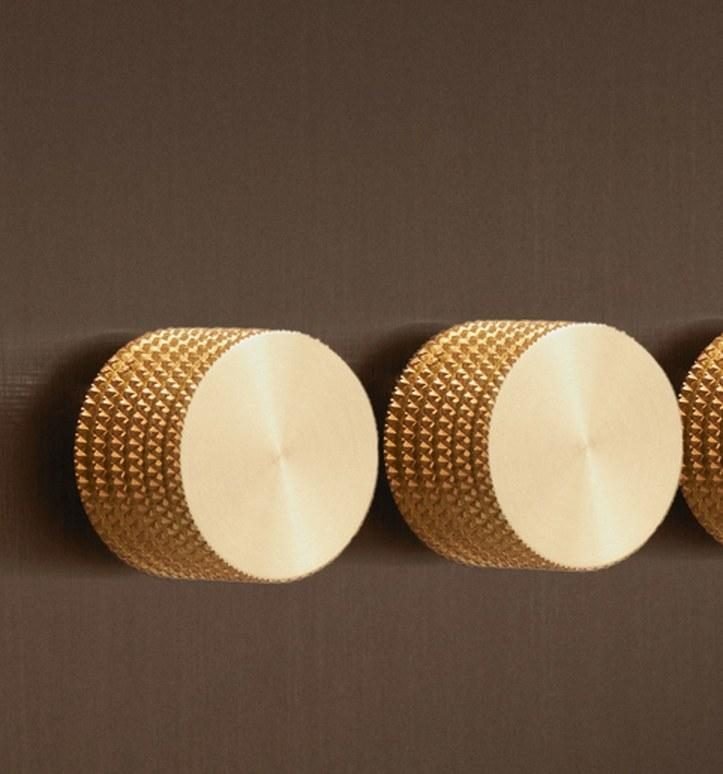
- Door and cabinet hardware: knobs, pulls, handles and fittings in brass and other metals.
- Metalware and décor: vases, candle holders, trays and decorative objects.
- Textiles and woodware: cushions, throws, rugs and wooden accessories.
The saving is real, but it is not automatic. A duty-free rate only applies when the goods qualify as Indian originating and the importer makes a valid claim. Every product should be checked against its own commodity code.

Rules of origin: when a product counts as Indian
A product does not qualify just because it was shipped from India. The UK government’s guide to CETA rules of origin sets out three ways a good can be originating:
- Wholly obtained or produced in India or the UK.
- Made entirely from originating materials, with final production in India or the UK.
- Made with non-originating materials that meet the product-specific rule for that commodity code, listed in Annex 3A of the agreement.
Product-specific rules can require a change in tariff classification, a minimum qualifying value content, a specific process, or a mix of these. So a brass pendant cast, machined, finished and wired in India is in a very different position from a lamp assembled in India from imported parts.
Two further points matter for décor:
- Minimal operations do not confer origin. Article 3.7 lists operations such as repacking, cleaning, labelling, sorting, testing and simple assembly. Doing only these in India is not enough.
- Non-alteration. If goods pass through a third country, they must stay under customs control and must not be processed further there.
This is why the factory’s bill of materials matters. If a supplier buys finished components abroad and only assembles them, the product may fail its rule. Ask early where every major input comes from.
How to claim zero duty as a UK importer
The UK government’s tariffs and customs page for India lists three bases for a preference claim:
| Basis of claim | Who provides it | What to watch |
|---|---|---|
| Origin declaration | The Indian exporter, self-certified | Must match the goods, the invoice and the commodity code |
| Certificate of origin | An issuing authority in India | Apply before shipping where possible |
| Importer’s knowledge | You, the UK importer | You must be able to substantiate the claim yourself |
On the Indian side, the Directorate General of Foreign Trade (DGFT) activated an electronic certificate of origin facility for CETA on its Trade Connect platform on 15 July 2026. Exporters can self-declare using a digital signature linked to their Import Export Code (IEC), or apply through an authorised agency.
If you missed the preference at import, the rules allow a delayed claim. An advisory from India’s Pharmaceuticals Export Promotion Council, citing the notified CETA rules, says a UK importer can ordinarily make a delayed claim within one year from the date of import and seek a refund of excess duty.
CETA and the DCTS: the two-year overlap
Many importers already used the UK’s Developing Countries Trading Scheme (DCTS) for Indian goods. That is changing. The UK government says India will leave the DCTS on 15 July 2028, after a transition period ending on 14 July 2028.
Until then, you may claim either DCTS or CETA preference, as long as the goods meet that scheme’s rules. But the proofs are not interchangeable. A DCTS origin declaration or Form A cannot support a CETA claim, and a CETA proof cannot support a DCTS claim. Pick one scheme per shipment and make sure your supplier’s paperwork matches it.
Steel and metal products
Metal buyers should note one exception. The UK introduced steel measures on 188 tariff lines from 1 July 2026, according to a Government of India factsheet, and CETA expanded India’s quota access under them. The products named include hot-rolled sheets, non-alloy wire, merchant bars and welded tubes. If you buy steel-based items, check whether your commodity code is covered.
A checklist for your next UK order
- Classify every product. Confirm the UK commodity code for each item. The duty rate and the product-specific rule both follow from it.
- Check the rule. Look up the product-specific rule in Annex 3A and compare it with how the item is made.
- Map the inputs. Ask your supplier for a bill of materials showing where castings, glass, cables and fittings come from.
- Agree the proof. Decide who issues the origin declaration or certificate, and put it in your purchase order.
- Choose CETA or DCTS. During the overlap, use one scheme per shipment and keep the matching proof.
- Keep records. The UK guide asks exporters to keep origin records for at least five years from the date of the origin declaration. Importers have record-keeping duties too.
- Review old shipments. If you paid full duty on originating goods since 15 July 2026, ask your customs broker about a delayed claim.
How Neh Need helps UK buyers
As a direct exporter from India, Neh Need ships under its own name and handles export documents for each order. We work with more than 200 partner factories across India, with in-house CAD designers, engineers and QC inspectors.
Because we develop products with our factories, we can show you how each item is made and where its main inputs come from. That makes origin questions easier to answer before production, not after shipment. We source lighting, door and cabinet hardware and wider home décor, and every project comes with eight standard quality reports, including first article, midline and final inspection reports.
New to buying from India? Start with our buyer’s guide to sourcing home décor from India, or read how a sourcing agent compares with a direct exporter.
This article is general information, not legal or customs advice. Confirm the rules for your products with HMRC guidance or a licensed customs broker.
Frequently asked questions
When did the India–UK trade deal come into force?
The India–UK CETA entered into force on 15 July 2026. It was signed in London on 24 July 2025.
Is home décor from India now duty-free in the UK?
Most Indian goods, including handicrafts, metalware and many home décor products, have zero-duty access under CETA. The zero rate applies only if the product meets the rules of origin and the importer makes a valid preference claim.
What proof of origin do I need to import from India under CETA?
A UK importer can claim preference on the basis of a self-certified origin declaration from the exporter, a certificate of origin from an issuing authority in India, or the importer’s own knowledge, which the importer must be able to substantiate.
Can I still use the DCTS for goods from India?
Yes, until India leaves the DCTS on 15 July 2028. During the transition you can claim either scheme if the goods qualify, but DCTS and CETA proofs of origin are not interchangeable.
Work with Neh Need
Sourcing from India? Let’s talk.
Lighting, hardware and home décor — developed, made and inspected in India’s finest workshops. Tell us what you need and we’ll reply within two working days.
Ship to the UK with us