
Home / Insights / Materials & finishes
Materials & finishes
What Is Knurling? A Guide to Knurled Hardware
The texture behind the most-wanted brass hardware — how it is made and how to specify it.
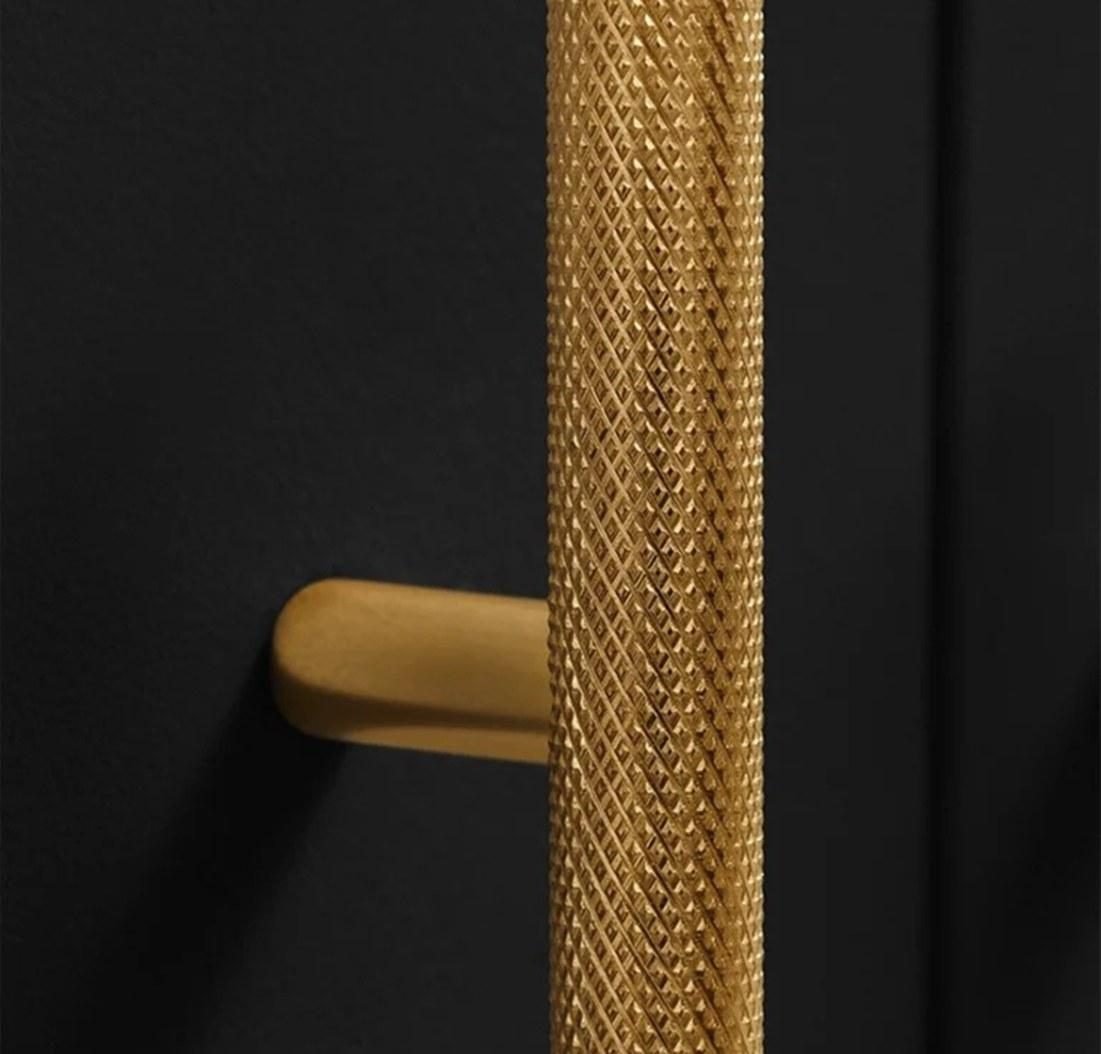
Knurling is a textured pattern of straight, angled or crossed lines worked into the surface of a turned metal part on a lathe. It adds grip and a precise, tactile look — which is why it appears on so many premium cabinet pulls, knobs, door levers, dimmers and lamp holders.
The main knurl patterns
| Pattern | What it looks like | Where it suits |
|---|---|---|
| Straight (linear) | Fine lines running along the part | Knobs, dimmers, minimal pulls |
| Diamond | Raised diamond points from two angled sets of lines | Pull bars, T-bars, levers — the classic look |
| Cross (square) | A square grid from lines along and around the part | Bold, industrial pieces |
Cut knurling vs form knurling
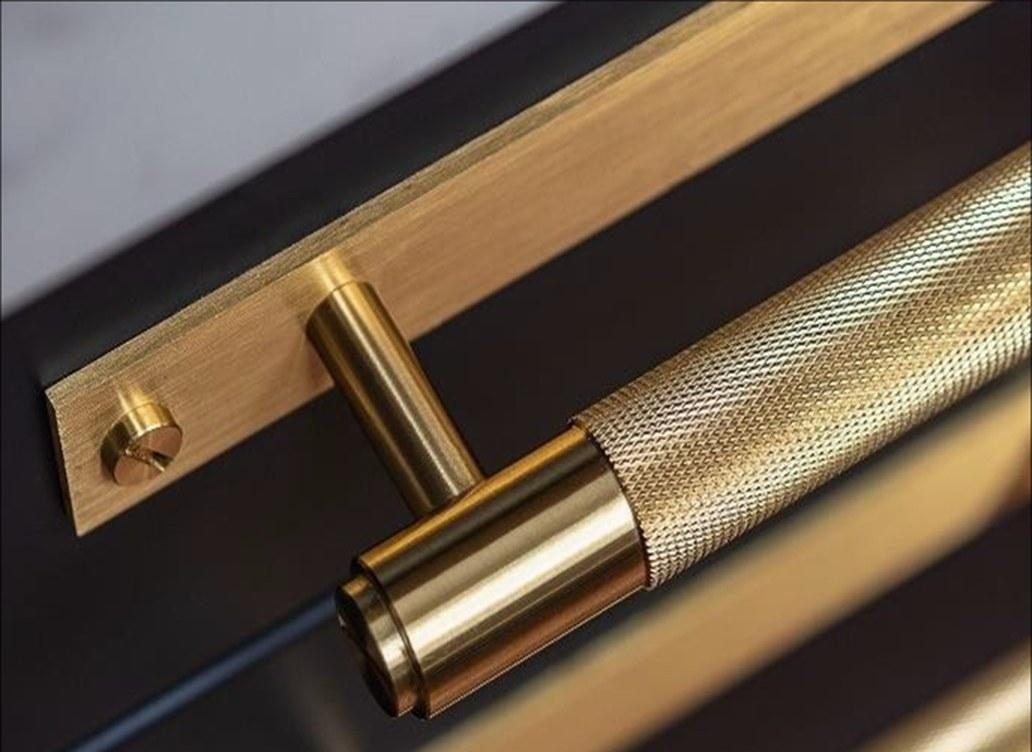
Form (roll) knurling presses hardened wheels into the rotating part, displacing the metal into the pattern. It is fast and strong, but it slightly increases the diameter and can give softer edges.
Cut knurling uses tools that cut the pattern, removing material instead of pushing it. It gives crisper, sharper points and less stress on the part — the method usually chosen for fine brass hardware where the pattern is the design.
Pitch: fine, medium or coarse
Pitch is the distance between the lines. A fine pitch feels smooth and refined and suits small knobs; a coarser pitch reads boldly from across a room and gives more grip. Pitch must also suit the diameter: on small parts a coarse knurl can look heavy and is harder to keep even.
Brass or stainless steel?
Solid brass machines cleanly and takes a crisp knurl. It is the usual choice for warm finishes such as natural lacquered brass, antique brass and gold-tone PVD, and it feels heavy and substantial in the hand.
Stainless steel (SS304) is harder, so knurling it wears tools faster and takes more care, but the result is very durable and suits machined-steel, black and gunmetal looks. Some designs combine both: a stainless bar with brass knuckles or end caps.
Where knurling appears in a collection
| Piece | Typical knurl | Why |
|---|---|---|
| Cabinet pull bars and T-bars | Diamond or cross | Grip and a strong visual texture along the bar |
| Furniture knobs | Diamond or straight | Small size suits a finer pitch |
| Door levers | Linear or diamond band | A knurled band gives grip where the hand rests |
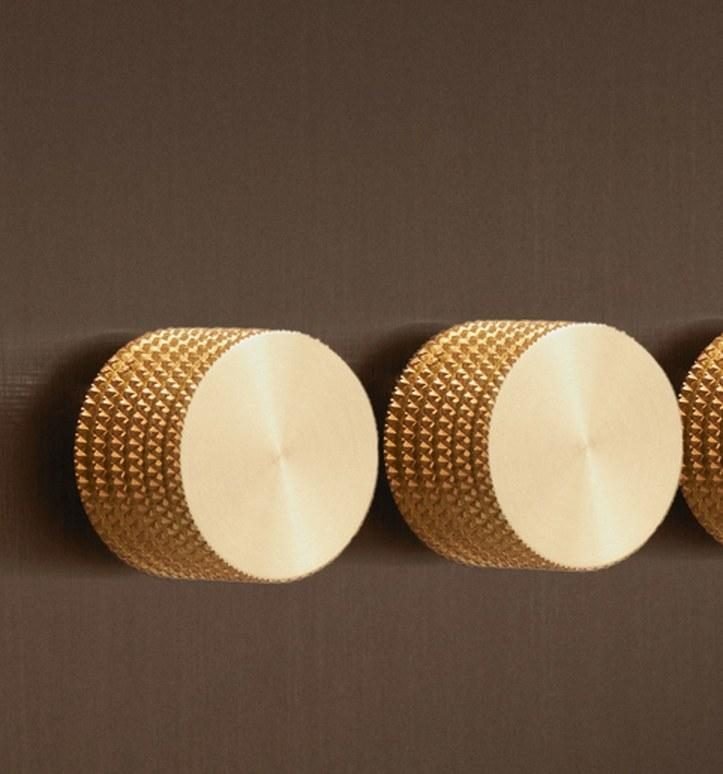
| Dimmer and control knobs | Fine straight or diamond | Precise feel when turning |
| Lamp holders and lighting parts | Fine straight | Makes lighting match the hardware in a room |
Using the same knurl pattern across hardware and lighting is one of the simplest ways to make a collection feel designed as a whole.
Quality checks for knurled hardware
- No “double tracking” — where the pattern starts twice and the lines do not meet cleanly.
- Consistent depth and sharpness along the full knurled length.
- Clean start and stop of the knurled band, with deburred edges.
- Matching sets — pulls of different lengths from one collection should share the same pitch and look.
- Finish over the knurl — even colour in the valleys as well as on the points.
How to specify knurled hardware
- Pattern (straight, diamond or cross) — with a reference photo or sample.
- Pitch, or simply fine / medium / coarse plus a sample.
- Length and position of the knurled band, shown on the drawing.
- Material (solid brass or stainless steel) and finish (PVD, EPL, natural lacquered).
- Which pieces must match in a set.
Knurling is a speciality of our machining partners. See our door and cabinet hardware and CNC machining and finishing capabilities.
Frequently asked questions
What is the difference between diamond and cross knurling?
Both are made by two sets of crossing lines. A diamond knurl usually has lines running at an angle to the axis, producing raised diamond points; a cross or square knurl has lines running along and around the part, giving a square grid. Names vary between makers, so always approve a physical sample.
Can knurled brass be PVD coated?
Yes. Knurled brass is often finished in PVD or EPL. The knurl must be deburred and thoroughly cleaned first, because any burr or residue shows clearly under a thin coating.
Is knurled hardware hard to clean?
A fine or medium pitch knurl with a protective finish is easy to wipe clean. Very coarse knurls can trap dirt, which is one reason pitch should be chosen with the use of the piece in mind.
Work with Neh Need
Sourcing from India? Let’s talk.
Lighting, hardware and home décor — developed, made and inspected in India’s finest workshops. Tell us what you need and we’ll reply within two working days.
See our knurled hardware